

The Real Cost of Launching a Food, Beverage or Supplement Brand in Australia
- Written by: Daily Bulletin
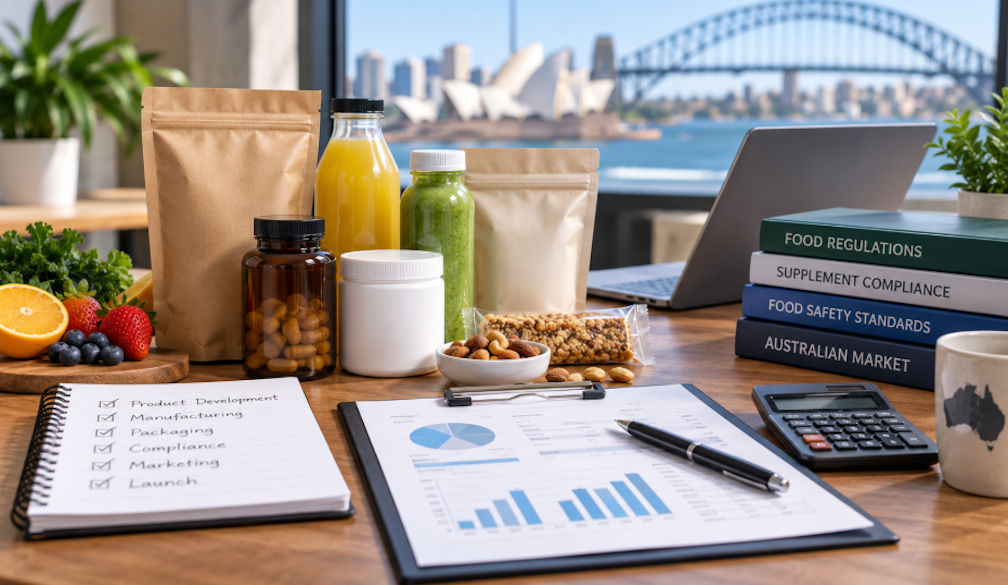
"How much will it cost to manufacture my product?" is usually the first question a founder asks, and it's also the hardest one to answer honestly. There's no single figure that applies across food, beverage and supplement categories, because cost is shaped by ingredients, packaging format, production volume, manufacturer location and how far a formulation has already been developed. Founders who go in expecting a fixed number are often the ones who end up under-capitalised halfway through their first production run.
What follows isn't a price list, because an honest one doesn't exist. It's a breakdown of where the money actually goes, and the questions worth asking before committing a budget to a launch.
Formulation and product development
Before a single unit is manufactured, most brands go through a formulation and sampling phase. This covers recipe development, ingredient trials, shelf-life testing and refining taste, texture and function until a product is genuinely ready for commercial production. Depending on complexity, this phase alone can run from a few thousand dollars for a simple powder blend to significantly more for a multi-ingredient functional drink or a gummy with specific dosing requirements.
Founders sometimes try to skip or shortcut this stage to save money, going straight from a home recipe to a full production run. This is one of the most common ways a launch budget gets blown, because problems that would have surfaced in a small sampling batch instead show up in a paid, full-scale production run, at a much higher cost to fix.
Ingredients and packaging
Ingredient cost scales with production volume, but it isn't always linear. Small first runs often pay a premium per unit because they don't hit the volume discounts larger manufacturers negotiate with suppliers. Packaging follows a similar pattern: custom packaging, printed pouches, branded bottles or specialty jars, all carry setup costs (plates, dies, tooling) that get spread across the first production run, which is why a small first batch can carry a disproportionately high packaging cost per unit.
A commonly used rough guide is to look at competing products already on the market and divide their retail price by three to five to estimate a realistic production cost target. It's not exact, but it gives founders a sense of whether their concept, ingredients and packaging ambitions are actually compatible with a viable retail price before too much money has been committed.
Minimum order quantities and the cost of scale
MOQs directly affect total launch cost, and they vary significantly by category. Powder blends can sometimes start from as little as 50 to 100kg, gummies from around 1,000 units, and bars from roughly 5,000 units, while drinks and nutraceutical products typically require higher minimum runs given the equipment involved. A founder committing to a large MOQ to chase a lower per-unit cost can end up with more inventory than they can sell in the short term, which ties up cash that could otherwise fund marketing, retail listings or a second product.
The more sustainable approach for most first-time founders is matching MOQ to actual demand validation, launching with a smaller, appropriately scaled run, proving the product sells, and scaling into larger production once there's real sales data to justify it.
Compliance, testing and certification costs
Regulatory compliance carries its own cost line that's easy to underestimate. In Australia, FSANZ requirements apply to food products, and TGA requirements typically apply to supplements and nutraceuticals. Depending on the product, this can include nutritional panel testing, label compliance review, shelf-life and stability testing, and documentation to support any claims made on packaging. Brands targeting export markets need to budget for this again, since UK, EU and US markets each carry separate regulatory frameworks (FSA, EFSA and FDA respectively) with their own testing and documentation requirements.
Cutting corners here is one of the costliest mistakes a founder can make, not because the testing itself is expensive, but because non-compliant labelling or claims can result in stock being pulled from shelves after launch, or a costly relabelling exercise once a batch has already been packaged.
The hidden cost: timeline
Time is a cost too, even though it doesn't show up on an invoice. The full pathway from formulation through to a first production run typically takes four to eight months depending on product complexity. Powder-based products tend to move faster, often three to four months, while gummies, bars, drinks and skincare products usually take five to seven months due to more complex manufacturing requirements. Packaging development generally runs in parallel and adds a further four to six weeks.
Founders who understand this timeline upfront tend to budget more realistically, because a longer runway means more months of overheads, storage, and cash tied up before any revenue comes in. This look at realistic timelines for launching a food product from scratch breaks down each stage in more detail and is worth reading before setting a launch date or a budget.
Where a manufacturing partner actually saves money
It might seem counterintuitive, but working with an experienced manufacturing partner rather than negotiating directly and independently with a factory often reduces total cost, not just complexity. A partner who already has relationships across multiple certified manufacturers can negotiate MOQs and pricing more effectively than a first-time founder approaching a factory cold, and can flag formulation or packaging issues before they turn into an expensive reprint or a failed production run. YGF Manufacturing is one example of this model in the Australian market, coordinating formulation, manufacturer selection and compliance under one process rather than leaving a founder to manage each piece separately.
Common budgeting mistakes founders make
A few patterns show up repeatedly in founders who run into cash flow trouble mid-launch. The first is budgeting only for the manufacturing invoice and forgetting freight, warehousing, and the cost of holding stock while retail listings and marketing catch up. The second is underestimating how many sampling rounds a formulation actually needs, particularly for more complex products like functional drinks or gummies, where getting taste, texture and dosing right can take several iterations rather than one or two.
The third, and probably the most common, is treating the first production run as the only cost that matters, rather than planning for a second and third run before the first one has even sold through. Retailers and distributors often want proof of consistent supply before committing to an ongoing listing, which means founders need enough runway to fund at least two to three production cycles, not just the launch batch.
Budgeting with eyes open
There's no getting around the fact that launching a food, beverage or supplement brand costs real money, and the number is different for every product. But founders who go in understanding where that cost actually sits, formulation, ingredients, packaging tooling, MOQ commitments, compliance testing and the time value of a multi-month development pathway, are in a far stronger position than those who only ask for a single per-unit quote. The brands that make it past their first production run are almost always the ones who budgeted for the whole picture, not just the manufacturing invoice.

 Daily Bulletin


