

How to Fix Poor Subfloor Ventilation in Older Homes
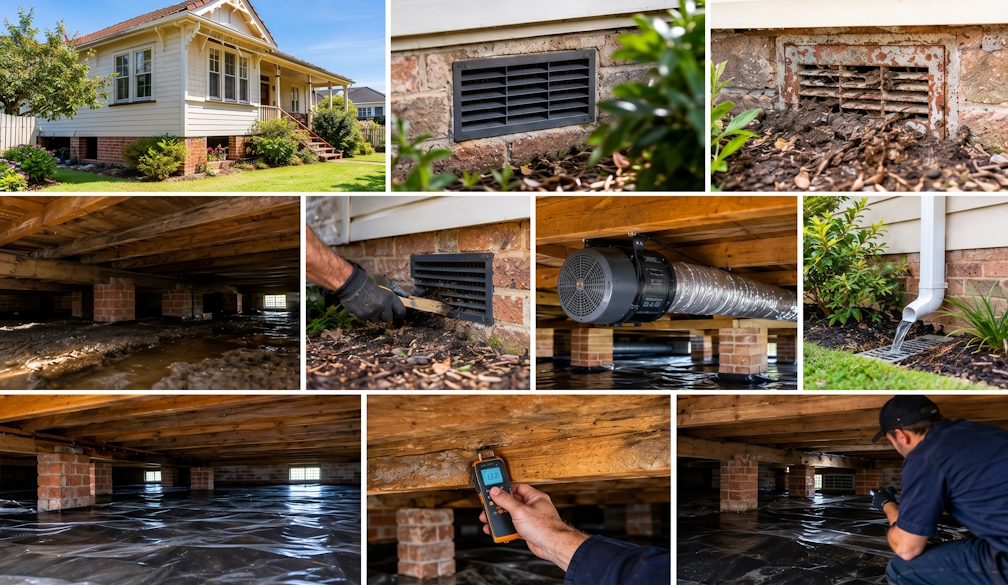
Older homes have character, but many were built before today's ideas about moisture and airflow were common. The result is often a subfloor that barely moves air at all. Moisture from the ground builds up, timber stays damp and problems appear inside the house long before anyone thinks to look underneath.
This guide covers how to tell whether your older home has poor subfloor ventilation, why it happens and the practical fixes that restore airflow and protect the floor structure.
Why Older Homes Struggle With Subfloor Ventilation
Several things work against older properties:
- Original vent design: Many older houses were built with few vents, or vents placed only on some walls, leaving pockets of still air.
- Later changes: Extensions, enclosed verandahs, new paving and raised garden beds often block or bury original vents.
- Ageing materials: Cracked, rusted or broken vent covers let pests in and restrict flow.
- Ground conditions: Clay soils and poor drainage in many Sydney suburbs add moisture that the original ventilation was never designed to handle.
- Reduced clearance: Some homes sit low to the ground, leaving little room for air to circulate.
Signs Your Subfloor Is Not Getting Enough Air
Poor subfloor ventilation shows up in the house before it shows up underneath. Look for:
- A musty smell that comes and goes with the weather
- Floorboards that feel cool, damp, soft or start to cup
- Mould on skirting boards or in wardrobes against external walls
- Condensation on windows that seems persistent
- Peeling paint or stained plaster near floor level
- Mould, fungal growth or white salt marks on subfloor timber or brick piers
- Signs of termites or borers, which favour damp timber
Any of these can have other causes, but several together usually mean moisture is trapped below the floor.
How to Fix Poor Subfloor Ventilation
Step 1: Find out what is actually wrong
Before adding anything, check what is already there. Are the vents clear? Are any covered by soil, plants or paving? Are they spread around the perimeter, or all on one side? Is there any internal wall or pier arrangement that stops air travelling through the space? Airflow problems are often caused by blockages rather than a lack of vents.
Step 2: Clear and repair existing vents
Remove mulch, soil and debris from around vents and keep garden levels below them. Replace broken or corroded covers with new ones that keep pests out while allowing air through. This is the simplest fix, and in some homes it is all that is needed.
Step 3: Add vents where air is not moving
Where whole sections of the subfloor have no airflow, additional vents placed on opposite walls encourage cross ventilation. The aim is a continuous path for air to move through the space, not just openings on one side.
Step 4: Consider mechanical ventilation
When natural airflow cannot do the job, because of tight layouts, high ground moisture or areas that cannot receive new vents, powered ventilation helps. Subfloor ventilation installation Sydney homeowners choose usually involves fans that draw damp air out and bring fresh air in, keeping moisture levels down even in still weather. It is common in older homes where extra vents alone will not solve the problem.
Step 5: Fix drainage and ground moisture
Ventilation works best when the source of moisture is also reduced. Make sure downpipes discharge away from the house, soil does not slope towards the walls and leaking pipes are repaired. Where the soil stays wet, a vapour barrier reduces the moisture rising into the space.
Step 6: Arrange a professional check
A specialist can measure moisture levels, review the layout and recommend the right combination of fixes. If you already suspect a problem, professional subfloor ventilation repair can restore airflow to spaces where vents have failed, been blocked or were never adequate in the first place.
Which Fix Suits Which Problem?
|
Problem |
Likely cause |
Best fix |
|
Blocked or buried vents |
Garden beds, paving, debris |
Clear vents and lower ground levels |
|
Damaged vent covers |
Age, rust, cracks |
Replace with pest proof covers |
|
Dead air pockets |
Vents on one side only |
Add vents to encourage cross flow |
|
Persistent humidity |
Ground moisture, tight layout |
Mechanical ventilation and a vapour barrier |
|
Water pooling near house |
Poor drainage |
Fix drainage and downpipe discharge |
What Happens If You Do Nothing
Poor ventilation lets moisture sit against timber for months and years. Bearers and joists lose strength, floors soften and mould spreads into the home. Termites and borers are drawn to consistently damp timber, which can add a pest problem to the moisture problem. What starts as a ventilation issue can end up as structural repair work costing far more than fixing the airflow early.
Tips for Owners of Older Homes
- Keep garden beds, mulch and soil clear of vents at all times
- Avoid storing cardboard or timber offcuts under the house
- Check vents after major landscaping, renovations or extensions
- Have the subfloor inspected every two to three years, more often near the coast or on low-lying ground
- Get an inspection before buying, selling or renovating an older property
Frequently Asked Questions
How do I know if my subfloor has poor ventilation?
A musty smell, cool or soft floors, recurring mould and condensation are common signs. A professional inspection confirms the moisture level and airflow.
Are more vents always the answer?
Not always. Vents only help if air can travel through the whole space. Sometimes clearing blockages or adding mechanical ventilation works better than adding more openings.
Is mechanical ventilation worth it in an older home?
Often yes, especially where natural airflow is limited or ground moisture is high. It keeps air moving even when there is no breeze.
Can poor ventilation damage my floors?
Yes. Persistent moisture softens timber, encourages mould and can attract termites and borers, weakening the structure over time.
Will improving ventilation stop mould coming back?
It usually helps a great deal, provided drainage and ground moisture are also addressed. Ventilation alone will not solve a leak or standing water.
How long does it take to improve a damp subfloor?
It depends on the conditions, but most homes see moisture levels drop noticeably within weeks of improved airflow, with fuller drying over a longer period.
Final Thoughts
Older homes are more likely to have poor subfloor ventilation, but it is usually fixable. Clear what is blocked, repair what is damaged, add airflow where it is missing and deal with drainage and ground moisture at the same time. Acting early keeps the floor structure sound, reduces mould and protects the value of the home.


 Daily Bulletin


