

Professor Daniela Rus: A new voice in the VinFuture Prize Council - Honoring AI and Robotics revolution
- Written by: Daily Bulletin
- Published in News from Asia
HANOI, VIETNAM - Media OutReach Newswire - 7 March 2025 - As Artificial Intelligence (AI) and robotics have increasingly reshaped industries and societies, promising to be the multibillion-dollar opportunity in the next decade, the VinFuture Prize is committed to recognizing and honoring pioneers who have driven this technological revolution.
After the 2024 Grand Prize honored five scientists for their contributions to advancing deep learning, the Prize Council has now welcomed Professor Daniela Rus, Director of the Computer Science and Artificial Intelligence Laboratory (CSAIL) at MIT, as its newest member.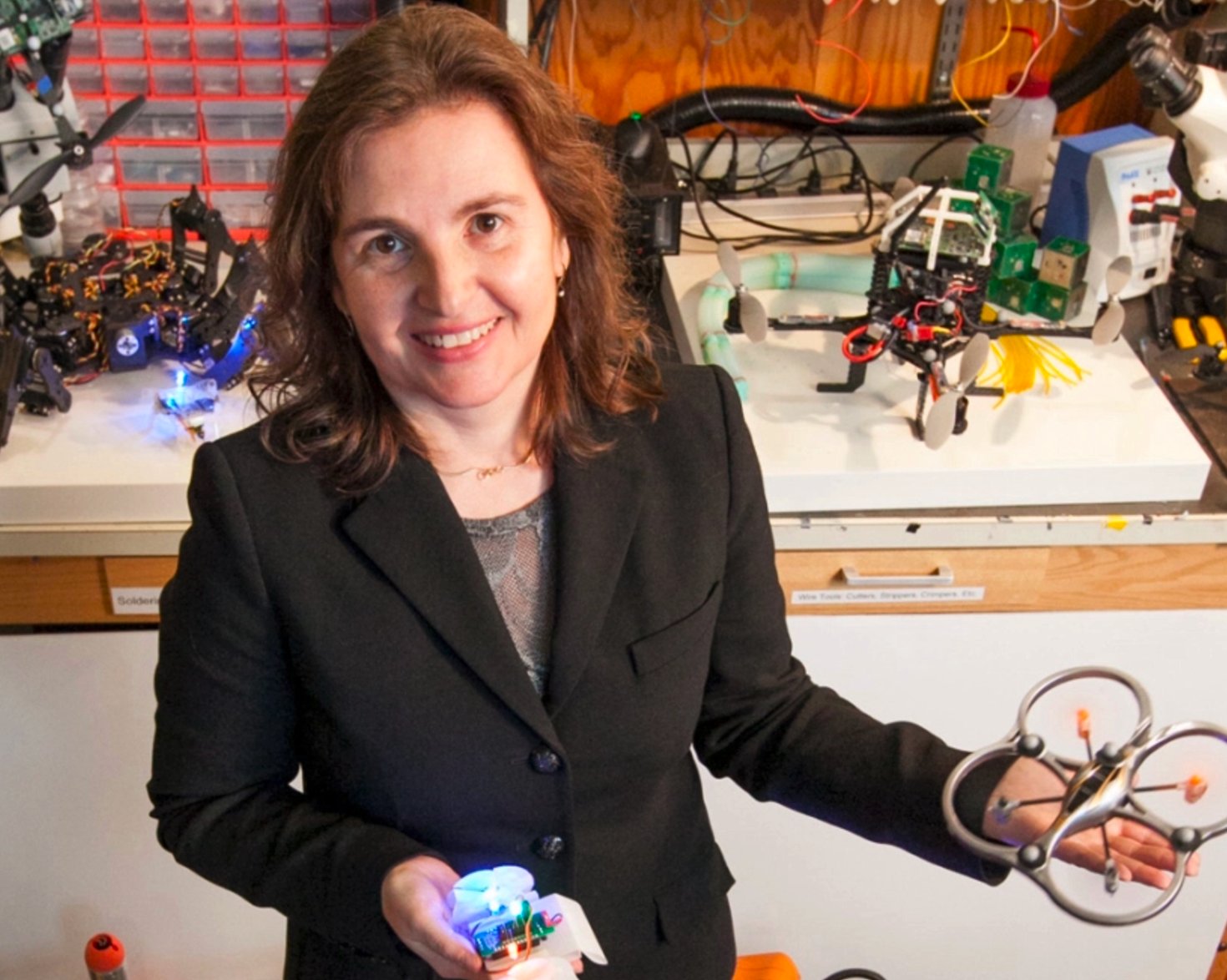
Professor Daniela Rus. Photo courtesy of the Computer Science and Artificial Intelligence Laboratory (CSAIL).
On the occasion of International Women's Day, Professor Rus reflects on her journey in a field long perceived as male-dominated and shares how AI plays an important role in shaping the future of robotics.
From the leap of AI to robots
The rapid evolution of artificial intelligence presents significant opportunities for robotics to drive industrial revolution. AI models are surprisingly humanlike in their ability to process text, video, images, and other data when prompted. However, Professor Rus pointed out that so far, these algorithms have largely remained relegated to the digital world, rather than the real world. Meanwhile, robots excel in the physical world but lack inherent intelligence, relying largely on pre-programmed instructions.
This is a decade when AI will finally make the leap from the digital world to the real world. Professor Rus envisions bridging this gap by integrating AI into robotics to make real-world physical machines intelligent. "They can be robots and also other machines, including power grids, sensors, and satellites; essentially anything you want in the physical world," she said.
This vision requires what Professor Rus calls "physical AI." In other words, it means developing AI models that not only process information but also understand the physics of the real world, she explained. This requires overcoming the limitations of current statistical AI, which lacks a deep understanding of real-world physics.
Ultimately, Professor Rus emphasized the need to develop AI solutions that are physics-aware, causal, error-free, compact and integrated into physical systems. With many researchers and scientists actively pursuing these advancements, she predicts a complete transformation of industries over the next decade.
"In healthcare, AI-driven diagnostic tools can improve monitoring and disease detection. Meanwhile, autonomous systems promise safer roads, reducing fatalities, and making our transportation system much more efficient and effective. One of the most exciting applications is real-time language translation, which can enable seamless global communication." she clarified.
In general, AI and robotics hand in hand could liberate humans from mundane routine tasks, enabling them to dedicate their efforts to higher-level activities such as strategic thinking and creative problem-solving. However, Professor Rus also emphasized the importance of acknowledging the current limitations of machine learning and cautioned against over-reliance on robotics as a universal solution.
Embrace the AI era
Recognizing the profound impact of AI on industries and societies globally, Professor Rus expressed her appreciation for the VinFuture Prize's recognition of the pioneers driving this transformation, comprehensively acknowledge contributions from all three core pillars of AI revolution: machine-learning (Professors Yoshua Bengio – Geoffrey Hinton – Yann LeCun), datasets (Professor Fei-Fei Li) and hardware (Mr. Jensen Huang).
"The prize highlights how far we've come from the scientific foundations of AI to the point where it can create so much impact in improving our lives and contributing to a better world," she exclaimed.
As the newest member of the esteemed VinFuture Prize Council, she expressed her anticipation for a productive collaboration, aligned with the Council's objectives: "The VinFuture Prize is remarkable, and it is wonderful to see AI researchers and advancements receiving this level of recognition. My expectation is that this collaboration will focus on identifying and celebrating groundbreaking achievements and people who have made those contributions that have the potential to transform industries and improve lives."
Regarding the long-term impact of intelligent robots in the near future, Professor Rus emphasized the necessity of equipping individuals with the knowledge and skills required to navigate this evolving landscape. She highlighted the importance of achieving digital literacy to adapt to the inevitable technological shift, through formal education, corporate training, or community-led initiatives. "It's important to recognize that these tools are neither inherently good nor bad: their impact depends on how we choose to use them," she stressed.
With the advocate from the VinFuture Prize to the constant development of AI, Professor Rus was confident that this would serve as a rallying point to inspire more young researchers and developers worldwide to push the boundaries of AI and robots across borders.
"We are at a pivotal moment where AI is beginning to make a profound impact on the world. The Prize will energize the younger generation to participate, learn, and contribute. The more that young scientists and engineers engage with AI and robotics, the faster we will see meaningful advancements that create a more equitable and sustainable future for all," she remarked.
"The path is never a straight line"
Recognized among the distinguished women leading the global advancement of AI and robotics, Professor Rus traces her passion to an early fascination with science fiction. Her subsequent studies in computer science, mathematics, and astronomy provided a foundation for her academic journey, which was further shaped by the guidance of her future PhD advisor.
Inspired by her advisor, she became deeply intrigued by the potential application of computation to interact with the physical world. "This realization was a turning point for me, as I saw an opportunity to work on something groundbreaking," she said.
Reflecting on the state-of-the-art at that time, most robots were characterized by humanoid forms, robotic arms, or box-like wheeled machines, predominantly constructed from metal. Despite their power, these industrial robots proved impractical for factory assistance due to their bulk, weight, and inherent safety risks.
Professor Rus adopted an alternative approach to address this challenge: "I realized how the natural world was full of diverse forms and materials and explored ways to expand the definition of a robot to include a wider range of these. In my lab, we pioneered early work in soft robotics and investigated using silicone, paper, and even food as the basis for making new robots."
This research approach led her to pursue the development of machines possessing both physical form and cognitive capabilities, aiming to optimize the synergy between structural design and intelligent control, motivating machines to act with purpose and adaptability. "By merging smarter AI with innovative materials and designs, we can push the boundaries of what robots can achieve," she explained.
Throughout her remarkable journey, Professor Rus distinguished herself with unwavering commitment to advancing the science and engineering of intelligence. She demonstrates a persistent dedication to addressing evolving challenges within the field, in pursuit of a future where machines seamlessly integrate into human lives, supporting people in both physical and cognitive tasks.
"Challenges are inevitable, and the path is never a straight line. The key is to stay focused on a big goal." Professor Rus emphasized, "You have to adapt to wherever science and engineering can take you. Studying these machines has taught me that we have so much opportunity and more left to learn, not only about the machines but also about ourselves."
| The VinFuture Foundation, established on International Human Solidarity Day on December 20th, 2020, is a non-profit organization co-founded by billionaire Mr. Pham Nhat Vuong and his wife, Mrs. Pham Thu Huong. The Foundation's core activity is awarding the annual VinFuture Prize, which recognizes transformative scientific and technological innovations capable of making significant positive changes in the lives of millions of people worldwide. The nomination period for the 2025 VinFuture Prize will close at 2:00 PM on April 17, 2025 (Vietnam time, GMT+7). https://vinfutureprize.org/vinfuture-prize-nomination/ The VinFuture Prize consists of four prestigious awards presented each year. The most esteemed is the VinFuture Grand Prize, valued at US$3 million, making it one of the largest annual prizes globally. Additionally, there are three Special Prizes, each valued at US$500,000, specifically dedicated to honoring women innovators, innovators from developing countries, and innovators with outstanding achievements in emerging fields. |
Hashtag: #VinFuture
The issuer is solely responsible for the content of this announcement.


 Daily Bulletin


