

What's made of legumes but sizzles on the barbie like beef? Australia's new meat alternative
- Written by: Martin Cole, Deputy Director of Agriculture and Food, CSIRO, CSIRO
There is a revolution taking place in burger joints and supermarkets across Australia. Plant products that taste and behave like meat are increasingly making their way onto the plates of consumers as concern grows over the environmental impact of food production.
This week the CSIRO launched its plant-based meat venture, v2food. Over the next year we plan to develop a range of wholly Australian meat alternatives to be sold in supermarkets and restaurants across the country. The products include protein from legumes, fibre from plants, and oils from sunflower and coconut.
Hungry Jack’s will be the first major fast food chain to stock our product. Meat-free burger patties will soon be available in their stores. Our mince will also be available in grocery stores in the near future.
The venture is a partnership between CSIRO, Main Sequence Ventures (CSIRO’s investment fund) and food retailer Competitive Foods Australia.
The alternative protein market is already worth billions of dollars in the United States. A recent CSIRO analysis of emerging food trends in Australia estimated the revenue from domestic consumption and exports of plant-based protein products could be A$6.6 billion in 2030.
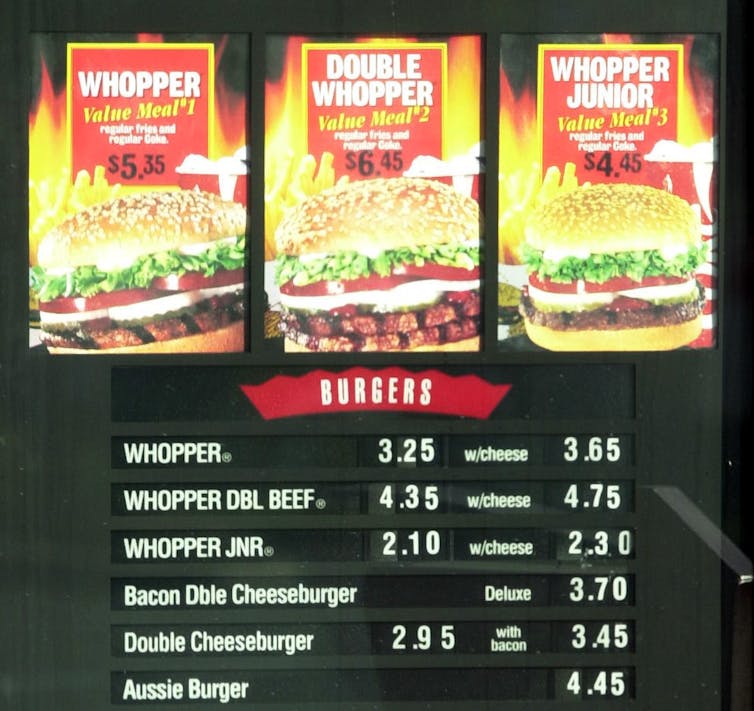 Hungry Jack’s will soon offer a plant-based burger patty alongside traditional meat options.
Dave Hunt/AAP
Hungry Jack’s will soon offer a plant-based burger patty alongside traditional meat options.
Dave Hunt/AAP
There’s a science to getting a meaty taste from plants
v2food’s plant-based meat alternatives are not solely designed for vegans. Meat-eaters are a key target, particularly those who are concerned about the impact of food production on the environment.
Building a burger out of plants that will appeal to a meat-eater is no simple task. The product not only has to have the texture of meat but also the flavour, including that chargrilled taste, and should perhaps even “bleed” like meat cooked just right on the barbecue.
Read more: Is vegetarianism healthier? We asked five experts
It took US companies Beyond Meat and Impossible Foods several years to bring a “beef” product onto the market. CSIRO’s specialists in food texture and flavour science achieved this in eight months.
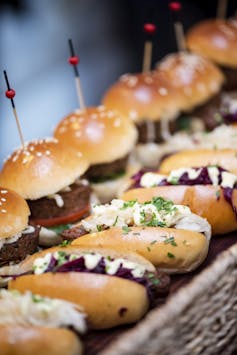 v2food’s mini hotdogs and sliders. CSIRO food scientists and nutritionists helped develop the products.
Tara Pereira
v2food’s mini hotdogs and sliders. CSIRO food scientists and nutritionists helped develop the products.
Tara Pereira
Known as sculptured food, the plant-based meat alternatives we’re working on comprise different ratios of plant proteins combined with carbohydrates from varying sources.
By studying the interactions of the ingredients at a molecular level and analysing the textures resulting from different processing techniques, it has been possible to develop products with the most appropriate texture, structure and bite – from soft to fibrous to cartilaginous.
Through formulation and processing, we coaxed proteins and carbohydrates to interact in different ways to form different textures.
We have also ensured the products are nutritious by introducing components such as pre-biotic fibres for a healthy gut, omega-3 plant-based or algal oils and micronutrients that provide extra vitamins and minerals.
More sustainable than meat
Meat production’s environmental impact has been the main driving force behind the development of plant-based protein alternatives. It contributes to climate change through the greenhouse gases emitted by livestock and deforestation to create grazing land.
As we developed the product we assessed the environmental impacts of different ingredients and made the most environmentally friendly choices.
Read more: Five ways the meat on your plate is killing the planet
We still have a way to go in reducing v2food’s environmental profile. For example, the processing technology required to make the meat alternatives doesn’t yet exist in Australia, so we sourced a soy protein from offshore and combined this with other natural ingredients rich in carbohydrates.
Within the next year, v2food will have the equipment to process local ingredients, which will go a long way towards providing a more sustainable alternative.
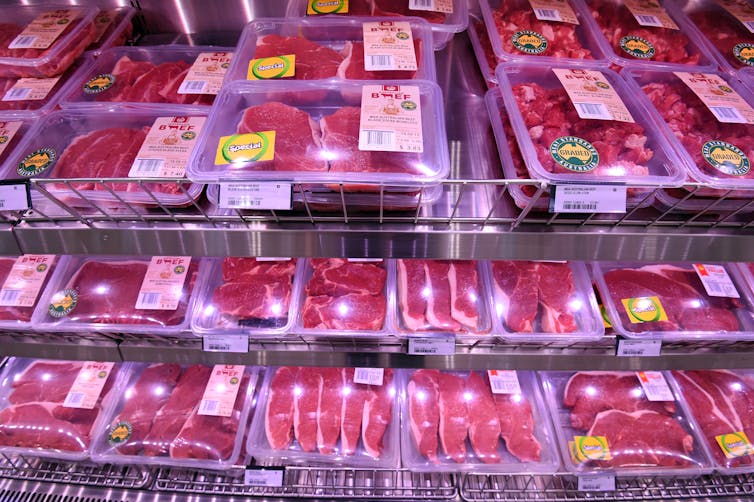 Meat on display at a Woolworths supermarket in Everton Park, Brisbane. The v2food venture is catering to meat eaters concerned about the environmental impact of food production.
Dan Peled/AAP
Meat on display at a Woolworths supermarket in Everton Park, Brisbane. The v2food venture is catering to meat eaters concerned about the environmental impact of food production.
Dan Peled/AAP
Plant-based products we’re working on, such as the burger patty, have less fat than their meat counterparts sold in fast food chains - in particular less saturated fat. They contain similar amounts of protein and have the added bonus of fibre, which is not found in animal protein and is inadequate in the diet of most Australians.
There is still room for improvement and nutritionists and food technologists are working on ways to make v2food products healthier and more nutritious - for example, bringing down the salt content.
Animal protein sources including red meat, poultry and seafood remain important components of a healthy diet in Australia because they provide nutrients that contribute to a healthy diet, including high-quality protein, iron, zinc, vitamin B12 and healthy omega-3 fats.
In Australia, chicken and red meat comprise 70 per cent of both lean meats and their alternatives. So incorporating plant-based meat alternatives can increase the diversity of protein sources in our diet.
What does this mean for Australian agriculture?
For now, v2food is calling its product “meat made from plants”. There are calls - in Australia and abroad - to limit the use of terms such as meat, milk and seafood to animal-derived products. However, global protein demand is expected to grow to such an extent that all protein producers, whether they be cattle farmers or legume growers, will be called on to fill the gap.
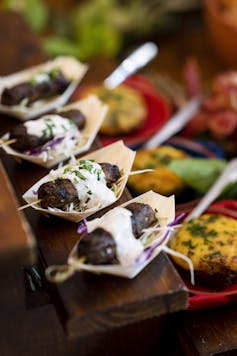 Currant and mint kofta by v2food.
Tara Pereira
Currant and mint kofta by v2food.
Tara Pereira
In the US, demand for Canadian yellow peas - a main ingredient in plant-based protein products - is outstripping supply. We’re mapping out what the supply chain might look like for plant-based proteins in Australia and the opportunities for plant breeders, growers and producers. Once we have the required processing capability within Australia, this will open the door to higher value uses of legumes.
By harnessing innovation across science disciplines of food, agriculture, sustainability and nutrition, we can achieve a healthy, sustainable and locally grown and produced product.
Authors: Martin Cole, Deputy Director of Agriculture and Food, CSIRO, CSIRO


 Daily Bulletin


