

No diesel, no power: why the global oil shock is hitting NZ’s small Pacific neighbours hard
- Written by: Sione Fanga Taufa, Associate Dean Pacific and Professional Teaching Fellow, University of Auckland, Waipapa Taumata Rau
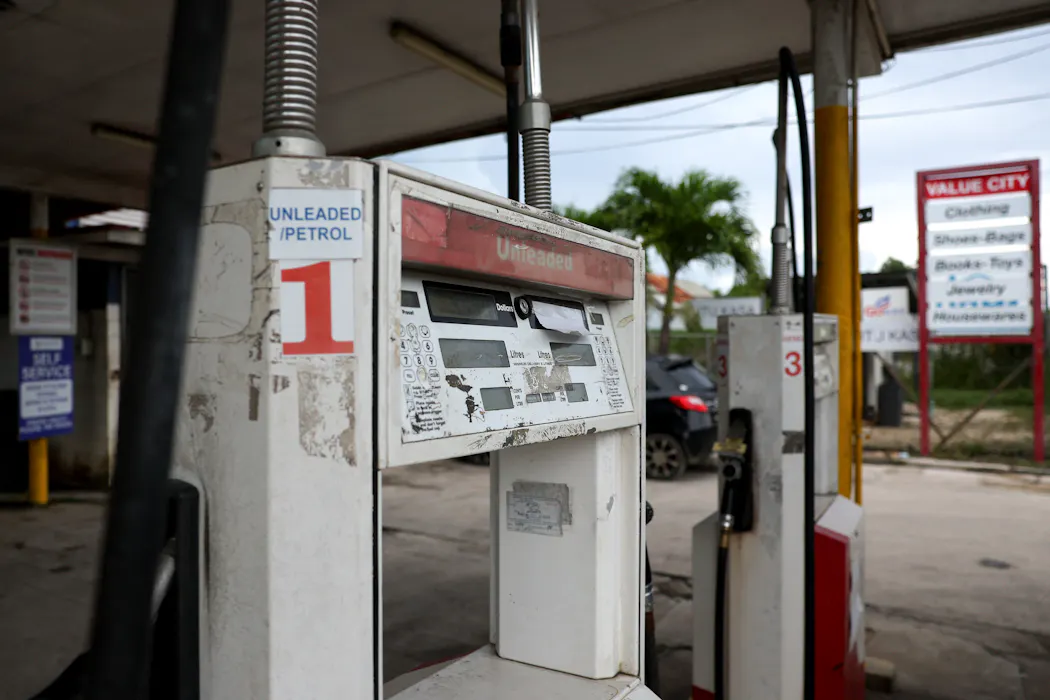
When Tuvalu recently moved to declare a state of emergency, it laid bare a major vulnerability long faced by New Zealand’s small and far-flung Pacific neighbours.
That is their heavy reliance on imported fuel – delivered through long and often fragile supply chains – to power electricity, transport and other essential services.
With a population of just over 10,600, Tuvalu spends roughly one quarter of its GDP on imported petroleum. With limited storage capacity and few alternatives, it requires regular diesel shipments to keep the lights on and services running.
In a country where fuel is already an expensive commodity, the crisis in the Middle East has sent local prices surging even higher, with diesel up 40% and petrol about 30%.
The situation may yet grow worse, with the possibility of no consistent shipments beyond June. By declaring a two-week state of emergency, Tuvalu’s government has granted itself special powers to ration supplies and manage services.
While this may ease immediate pressures, it won’t resolve those deeper, structural problems with the wider region’s fuel security.
For New Zealand, which recently took these worries to the White House, this moment presents an important opportunity to help its old Pacific allies finally overcome their energy hurdles and become more resilient.
A region under strain
Tuvalu’s case may be extreme, but is by no means isolated. Many other small Pacific nations have similar economies that rely on limited shipping connections. Some receive as few as 40 to 50 container ship calls a year.
This pushes up costs, as fuel and other imports must pass through multiple ports and intermediaries before reaching their destination.
Tuvalu also isn’t the only state to have taken drastic measures in response to the oil shock.
The Marshall Islands earlier declared a 90-day economic state of emergency. Its non-essential public offices have been closing at mid-afternoon, while strict requirements have been imposed to reduce electricity use.
Other Pacific governments are meanwhile taking stock of their fuel situations.
The Solomon Islands has reported holding between 40 and 50 days of fuel in-country, while Vanuatu has warned of rising electricity prices for residents. Palau, Nauru and Kiribati are also mulling their own responses.
If the global energy crisis worsens, some Pacific governments may be forced to subsidise fuel and power, squeezing vital spending on health, education and climate adaptation. A drop in tourist revenue, due to fuel prices making airfares more expensive, will be adding further pressure.
Such is the strain on the region that its Pacific Islands Forum has reportedly agreed to invoke the Biketawa Declaration – its highest crisis response measure.
This places countries on a high-alert footing as they prepare for potential fuel shortages. Proposals such as pooled fuel procurement and shared contingency planning are also being explored.
Navigating the road to resilience
Importantly, these developments are unfolding against a shifting geopolitical backdrop, as the Pacific attracts growing attention from traditonal partners such as New Zealand and Australia, but also increasingly influential actors such as China.
Investment by these larger regional players in aid such as infrastructure, energy and connectivity has been recently accelerating, driven by a mix of strategic competition, economic interests and diplomatic efforts to strengthen ties.
In this context, the Pacific’s fuel and energy security becomes much more than a logistical issue, but one that places its nations at the centre of geopolitical tensions.
But with this complexity comes opportunity.
Partnerships with these greater countries can help fund renewable energy, storage and infrastructure, gradually reducing their dependence on imported fuel. Even so, it is important that Pacific governments keep control over decisions to ensure that supported projects reflect local needs and priorities.
For New Zealand, which has invested billions of dollars in aid and trade across the Pacific, there is an obvious role to play.
Its foreign affairs minister, Winston Peters, notably used a recent trip to Washington DC to raise concerns about the Pacific’s fuel vulnerability and explore potential support from the United States.
Being so closely connected to the Pacific through geography, history and people, New Zealand’s interest in the region’s energy security goes beyond foreign policy, to shared wellbeing and stability.
Building resilience will inevitably take time and much coordination. Among the most important steps will be expanding local renewable energy infrastructure, and other joint fuel security measures like those in the Biketawa framework.
Ultimately, the question that Tuvalu and other Pacific economies must reckon with is not whether more oil shocks lie beyond the horizon, but how much longer should stay so exposed to them.
Authors: Sione Fanga Taufa, Associate Dean Pacific and Professional Teaching Fellow, University of Auckland, Waipapa Taumata Rau


 Daily Bulletin


