

Business Blockbuster - Helpng business to be more visible on Google

Daily Bulletin

Economists award Chalmers top marks for budget, but less for fighting inflation

  • Written by: Peter Martin, Visiting Fellow, Crawford School of Public Policy, Australian National University
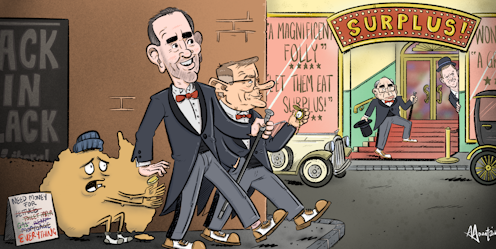
Economists award Chalmers top marks for budget, but less for fighting inflation

Asked to grade Jim Chalmers’ second budget on his own criteria of delivering “relief, repair and restraint”, most of the 57 leading economists surveyed by the Economic Society of Australia and The Conversation give it top marks.

On a grading scale of A to F, 37 of the 57 economists – almost two-thirds – gave the budget an A or a B.

The proportion giving the budget top marks is far higher than for the COVID-era budgets of his Liberal predecessor, Josh Frydenberg, which attracted top marks from 41% and 37% of the experts surveyed.

The economists chosen to take part in the survey have been recognised by their peers as Australia’s leaders in fields including macroeconomics, economic modelling, housing and budget policy.

Among those surveyed are a former head of the Department of Finance, a former member of the Reserve Bank board, and former Treasury, International Monetary Fund and Organisation for Economic Cooperation and Development officials.

Only one of the 57 surveyed gave the budget the lowest possible mark of F, and only three awarded it an E.

Ten of the experts qualified their approval by saying the budget should have done more to help vulnerable Australians suffering from higher rents and energy prices, including – but not limited to – Australians on JobSeeker.

Melinda Cilento, chief executive of the Committee for Economic Development of Australia, said while the increases in payments and support were “a good start”, they didn’t go far enough.

Consultant Nicki Hutley said even the promise of a staged increase in JobSeeker would have been better than “the miserly increase given”.

Few of those surveyed said they would have preferred a tougher budget. Some, including economist Saul Eslake, warned the economic growth forecasts were so weak (1.5% for 2023-24) that a budget that took money out of the economy might have increased the risk of a recession. The budget saved 82% of the revenue upgrades that had come from better-than-expected jobs and commodity price growth. Economist Rana Roy said if the budget had tried to save 100% of the revisions or more, it could well have triggered a recession or the first signs of it, and a reversal of the measures. “A tough policy that is unsustainable is not actually tough,” he said, referring to the fate of the measures introduced by Treasurer Joe Hockey in the Abbott government’s first budget in 2014, many of which were abandoned or modified. Read more: Budget 2023: budgeting for difficult times is hard – just ask Chalmers Other criticisms of the budget were that it failed to wind back the high-end Stage 3 tax cuts due mid next year (seven panellists’ criticised); that it was less generous to wage earners than those on benefits (two panellists) and that it offered little to address climate change (four panellists). Former Paris-based OECD director Adrian Blundell-Wignall said the budget was “short on policies to prevent climate change and long on policies to help people deal with it”. Some of the profits that had made the budget strong came from exporting fossil fuels, the emissions of which are not counted in Australia’s totals. Ken Clements of the University of Western Australia said the entire budget process needed to change. Decisions about defence, aged care, resource taxation and hundreds of other issues were all announced at once. A staggered approach might lead to better decisions and a better-performing economy. The economists were less generous in their assessment of the budget as a tool to fight inflation, with fewer than half (46%) awarding the budget an A or a B on its ability to keep inflationary pressures in check. More than 10% gave the budget the lowest possible marks of an E or F. Four of the economists flatly rejected the treasurer’s assertion that greater subsidies for rents, energy, prescriptions and doctors visits would dent inflation.
Blundell-Wignal said putting cash into the hands of households had been the main cause of the surge in inflation worldwide. James Morley of The University of Sydney said while spending to reduce power bills might make one or two quarters of the consumer price index look better, it would give consumers more money to spend spend and push up other prices. Richard Holden said anyone who didn’t think growth in spending of 0.9% of GDP was inflationary was “off their rocker”. It was enough to make the Reserve Bank push up interest rates by 0.25 percentage points more than it would have. The Grattan Institute’s Danielle Wood countered that the spending was likely to boost inflation by just 0.1%. The budget has inflation falling from 7% to 6% by the middle of this year, and to 3.25% by the middle of next year. Read more: No, the budget does not make further interest rate rises more likely Leonora Risse and Flavio Menezes said debate about whether the cost of living relief would slow the decline in inflation was misguided. “Electricity rebates and JobSeeker increases are inflationary in the same way as wage increases,” Menezes said. “Yet no one suggests that we should not increase wages at all to alleviate inflation.” Risse said rent still had to be paid and basics still had to be bought. If people couldn’t pay, they would skip meals, forgo heating during winter, and lose the stability of a safe place to call home, damaging the economy in more costly ways. Treasurers needed to consider more than a narrow definition of economics. Individual responses. Click to open: Authors: Peter Martin, Visiting Fellow, Crawford School of Public Policy, Australian National University

Read more https://theconversation.com/economists-award-chalmers-top-marks-for-budget-but-less-for-fighting-inflation-203896

Business News

The Growing Demand for Durable Plastic Packaging Supplies Across Australia

Why Do Australian Businesses Need Reliable Plastic Packaging Supplies? Businesses need packaging that can withstand everyday handling, storage, and distribution without creating avoidable delays. Pla...

Daily Bulletin - avatar Daily Bulletin

Office Cleaning Melbourne: Choosing the Right Scope for Your Office

A well-planned office cleaning Melbourne arrangement starts with a clear understanding of the premises and the people who use it. An office may include private work areas, shared desks, reception, mee...

Daily Bulletin - avatar Daily Bulletin

How Businesses Can Prepare for Unexpected Power Outages

Power failures can occur quickly. The supply may be interrupted by bad weather, issues with the electricity network, damaged equipment or local construction work. This can be just a hassle for a fam...

Daily Bulletin - avatar Daily Bulletin

How Chatswood Tutoring Can Fit Into a Student’s Weekly Routine

Create a Predictable Weekly Structure A consistent weekly routine can make study easier to manage when students are balancing several subjects. Chatswood tutoring can provide a fixed learning point a...

Daily Bulletin - avatar Daily Bulletin

The Rise of Digital Marketplaces in the Australian Trade Sector

For decades, the Australian trade and construction sector operated almost entirely on word-of-mouth recommendations and local community networks. Small business owners typically relied on local newspa...

Daily Bulletin - avatar Daily Bulletin

How Immigration Lawyers Can Help

Introduction Visa decisions can shape employment, family life, study plans, travel, and future residence. A small omission can lead to delay, added expense, or refusal. Immigration lawyers assess l...

Daily Bulletin - avatar Daily Bulletin

How Industrial Drying Equipment Supports Efficient Processing

Many industrial processes require moisture to be removed from compressed air, products or process materials before they move to the next stage. Excess moisture can affect equipment performance, produc...

Daily Bulletin - avatar Daily Bulletin

Practical Ways a Whiteboard Can Improve Workplace Communication

Effective communication helps teams stay organised, share ideas and keep track of important information. While digital tools are now common in many workplaces, a whiteboard continues to provide a simp...

Daily Bulletin - avatar Daily Bulletin

Designing Eco-Friendly Custom Water Bottles for Your Next Event

The Evolution of Sustainable Event Merchandise Event planning has undergone a massive transformation over the last decade. Gone are the days when organizers could hand out cheap, single use plastic...

Daily Bulletin - avatar Daily Bulletin

The Daily Magazine

How Much Life Does Your Roof Have Left? Recognizing When Replacement Becomes Necessary

A roof can age quietly for years. From the street, everything may look reassuringly ordinary, even w...

How Australian Drivers Can Make Their Cars Harder to Steal

Most people don't think much about car theft until it happens to them, or to someone they know. Th...

The Short-Term Rental Rules Australian Owners Can’t Afford to Guess At

A holiday let looks simple from the outside: a spare property, a listing, some guests. Underneath ...

The Risks Of Removing Ear Wax Without Professional Guidance

Ear wax is an essential component of the hygiene process since it acts as a barrier between the ea...

Plumbing Call-Out Fees in Perth Explained

When you hire a plumber to fix a problem with a dripping tap, leaking pipe, or whatever it might be...

Workshop Tool Maintenance: A Practical Guide to Drills, Sanders and Table Saws

A drill that strips every screw head. A sander that leaves swirl marks however long you work the pan...

How Architecture and Engineering Firms Can Improve Project Profitability

Project profitability remains one of the most persistent challenges for architecture and engineering...

The Blossoming World of Fresh Flower Delivery: An In-Depth Exploration

In recent years, the demand for fresh flower delivery in Sydney has soared, driven in part by the ...

How Penrith SMEs Can Keep Stock and Equipment Working for the Business

For Penrith SMEs in 2026, efficient inventory starts with reliable stock data: what is on hand, wher...