

The embarrassingly easy, tax-free way for Australia to cut the cost of electric cars
- Written by: Peter Martin, Visiting Fellow, Crawford School of Public Policy, Australian National University
Prime Minister Scott Morrison says he wants to keep prices down.
Without his party in power, “you’re going to see petrol prices go up, you’re going to see electricity prices go up”.
There’s something practical he can do straight away to stop prices from rising.
Apart from a home, a car is the most important purchase most Australians make.
We typically hold on to our cars for six years, and most last many years longer.
This means that when we buy a car we have to have an eye on the future, on what it will make sense to drive half a decade down the track.
Electric cars are cheaper overseas
In almost every way, certainly when it comes to running and maintenance costs, electric vehicles are the best option.
And yet their price is set to come down far faster overseas than in Australia.
Here’s why.
Europe has imposed what it calls CO₂ emission performance standards.
They don’t relate to particular cars, as the term “performance standards” suggests, but to an average of what’s sold over each company’s entire range.
Read more: Tough car emissions ceilings could get us well on the road to net-zero
From 2020 each manufacturer’s cars are limited to an average emissions of 95 grams of carbon dioxide emitted per kilometre, and vans to an average of 147 grams emitted per kilometre.
It’s up to the companies how they achieve this. They could do it by selling more low-emission and fewer higher emission conventionally-powered cars, or they could do it by selling more electric cars.
If they haven’t sold enough electric cars to get under their brand’s emissions ceiling, they’ll have to discount them to sell more in order to get average emissions down.
In Europe, electric sales are valuable
In the first year of the new European standard, average emissions from new passenger cars registered in Europe fell 12%. The share of electric cars tripled.
In 2025 the standard will become tougher again, requiring a further 15% cut in average emissions, and then from 2030 (for cars) a further 35%.
The big car manufacturers are finding it hard. It’ll make every electric car they sell valuable for them, valuable enough to sell cheaply, but only in Europe (and Canada, China, India, Japan, Korea, Mexico and the United States, which have similar standards, sometimes called fuel economy standards).
The International Energy Agency says four in five of the cars sold worldwide are subject to such standards.
In places where they are not (such as Australia) there is no particular reason for an international manufacturer to go all out to sell an electric car. It won’t help them meet the standard.
Australia has standards, sort-of
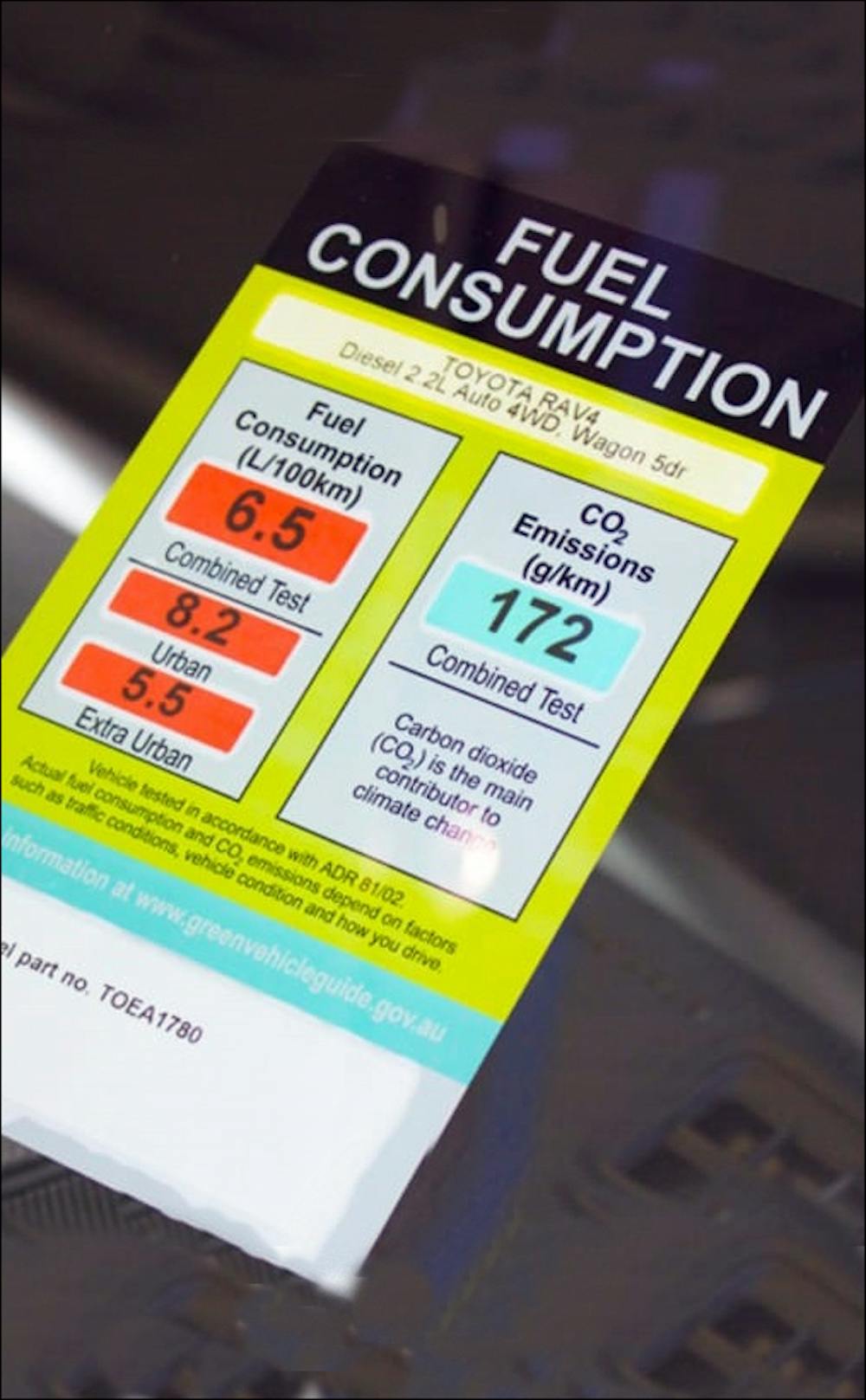
Not that Australia doesn’t have standards, of a sort. Since 2008 all new cars sold have had to display a sticker quoting fuel economy and emissions per kilometre.
The standards for actual CO₂ emissions are voluntary. The Grattan Institute kindly says they are “lacking in ambition and have often not been met”.
Faced with one of the few big markets in the world in which there is no particular imperative to sell electric cars, international manufacturers direct them elsewhere and sell higher emission cars here.
Their local arms want to sell better cars here, but are overruled.
The local head of Nissan puts it this way:
clear and consistent direction from governments is a critical signal to car makers to prioritise the importation of the latest low and zero-emissions vehicles
The local head of Volkswagen is more blunt.
Every six months we do an update with a board meeting on the electric vehicle environment in Australia. They are sitting in waiting for something to change, you know, but nothing ever changes. I guess the way I would put it is that it is embarrassing
It isn’t just that there is no particular incentive to discount an electric car sold in Australia. It is that there’s an incentive to charge more.
Without standards, we are an unattractive market
It harms a manufacturer’s profits to sell an electric car here that could be used to lower its average emissions profile in (say) Europe. It makes sense to do as much as is needed to keep it out of Australia.
Fixing the anomaly would be easy and would actually bring prices down, as well as increasing the limited range on offer. And it would help buyers of conventional vehicles worried about the price of petrol. New cars would use less.
Australians able to buy electric cars because of the change would find they used no petrol at all.
Read more: Top economists call for measures to speed the switch to electric cars
Introducing international-grade standards would not require a tax and would not require a tax concession. It would merely require regulations of the kind in place elsewhere.
Business won’t object. The Business Council asked for the change four years ago. Australian car makers won’t object. We no longer have any.
Petrol refiners won’t object. They are finding it hard to reduce the sulphur and other pollutants that kill hundreds of Australians each year. The government has advanced them up to A$250 million to help.
But carbon dioxide is different. We don’t need good quality fuel to reduce it, merely good quality cars. We are able to put them in the hands of more Australians near-costlessly.
Authors: Peter Martin, Visiting Fellow, Crawford School of Public Policy, Australian National University


 Daily Bulletin


