

Why should my child take swimming lessons? And what do they need to know?
- Written by: Michelle O'Shea, Senior Lecturer Sport Management, Western Sydney University
Drowning is the third leading cause of unintentional death from injury worldwide. From July 2018 to June 2019, 276 people drowned across Australia – a 10% increase on the previous year.
Among those were 19 children under four years old, eight children between five and 14 and a further 45 young people aged 15-24.
As temperatures soared this summer, 53 more people drowned at Australian beaches, rivers and pools including six children. There were also 584 non-fatal drownings requiring hospitalisation, and many unreported near-tragedies.
Structured swim classes that help kids become familiar with, and confident around, water can set the foundation for later swimming skills and aquatic safety.
It’s difficult to quantify the statistical significance of how effective swimming lessons can be. But some US research suggests formal swimming lessons can reduce the risk of drowning for children aged one to four by 88%.
Here’s what your child should ideally be able to do in the water at different stages of their development.
Pre-school (six months - four years)
Parents should be encouraged to play with their children in safe aquatic environments. Even the youngest babies can be taught swimming survival skills, like floating on their backs. Splashing around and gliding through the water can aid cognitive and physical development for infants and toddlers.
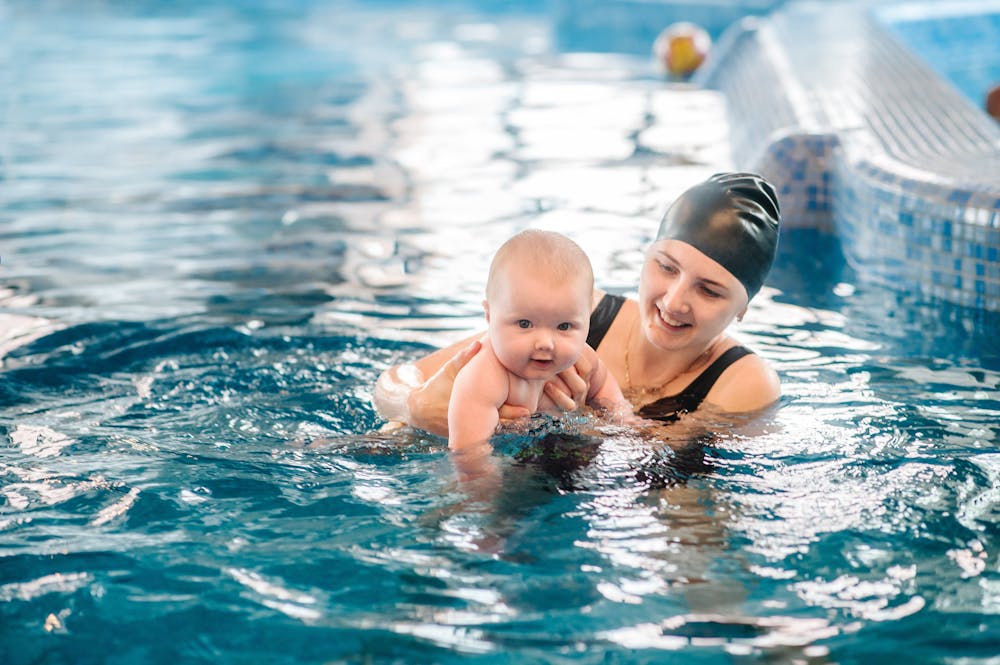 It’s good for babies to splash around in the water.
From Shutterstock.com
It’s good for babies to splash around in the water.
From Shutterstock.com
Early experiences of this kind can also improve parents’ awareness of child safety. No matter how familiar the child is with the water, it’s important for parents to never overestimate their child’s abilities and supervise them without distractions (such as mobile phones) at all times.
By the time children are four, they should ideally be able to enter and leave the water safely (by checking depth and looking for obstacles or hazards in the water). They should also be able to float, move through the water and control their breathing.
Primary school (five to 12 years)
Most primary schools involve children in intensive swim programs. These can be a useful way to increase swim skills and help children if they get into trouble in the ocean or a pool.
But one Australian study found children need ongoing weekly swimming instruction, in addition to their school swimming programs, to maintain their swimming and water safety skills.
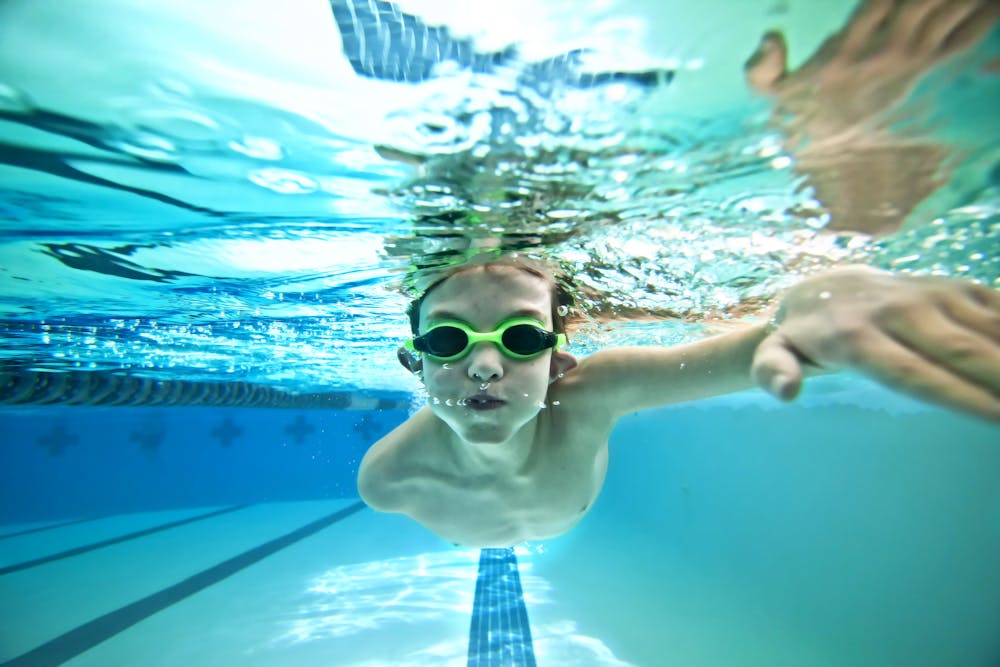 By the time children are 11-12 years old, they should be able to swim continuously for 50 metres.
from Shutterstock.com
By the time children are 11-12 years old, they should be able to swim continuously for 50 metres.
from Shutterstock.com
Due to money and time, most children’s involvement in formal swimming lessons significantly declines in the later primary years. This means many children stop swimming lessons before they have learnt the basic skills they need to keep them safe.
To help parents meet sport activity costs, some state governments have implemented voucher style systems for swimming lessons. For instance, parents of NSW school aged children can claim up to two A$100 vouchers if they access swimming lessons through registered providers.
Children who are 11-12 years old should be able to:
continuously swim 50m using freestyle or backstroke
scull (use their arms to move around in the water) float or tread water for two minutes
throw a rescue flotation aid to a partner at five metres away
swim fully clothed, in swimwear or normal clothes (to simulate an accidental fall into water).
Secondary school (11 to 18 years)
High school (and older) students need broad water safety programs aligned with their secondary school curriculum. Programs should address the skills, as well as knowledge, behaviour and attitudes of this group of students to promote safer behaviour in water environments.
Read more: For many, a pool swim is an Australian birthright. Let's make it easier for solo parents to claim it
Changing the terminology from “learn to swim” or “swimming lessons” to “lifesaving and survival” – and promoting these as lifelong skills – may encourage more teenagers and young adults to take swim classes.
Groups at risk
Water is not naturally considered a recreational resource for many migrant communities and their swimming experiences and exposure to formal water safety is often limited.
This puts migrant groups at particular risk of drowning.
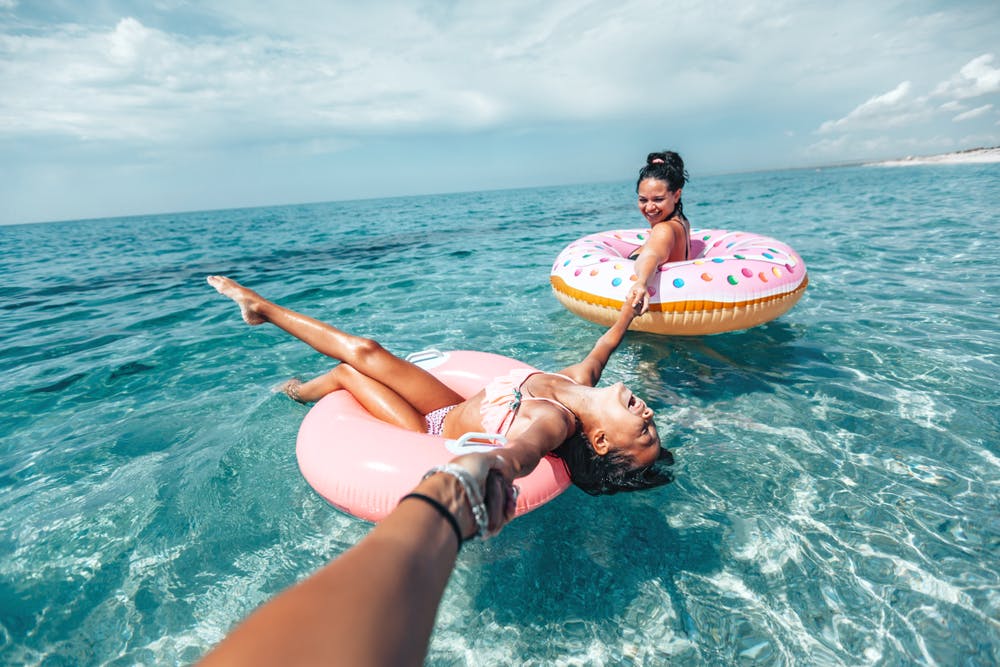 Swimming can be fun for the whole family.
From Shutterstock.com
Swimming can be fun for the whole family.
From Shutterstock.com
In one study, 91.3% of participants born in Australia either were taking their kids to swimming lessons, or had previously done so. In contrast, only 76.7% of children whose parents were born outside Australia were, or had previously, taken swim lessons.
Read more: Australia's spike in summer drownings: what the media misses
Girls from culturally diverse backgrounds and children living in lower socioeconomic areas are less likely to go to the pool or the beach, or get swimming lessons. The high costs of lessons and geographic distance from swimming pools and restrictive clothing requirements due to cultural or religious beliefs are added complications.
We need clear policy and collective action to encourage these groups to take swimming and water-safety lessons.
Swimming is fun
Making children take swimming lessons can also make them dislike swimming, associating it with something they have to do. Swimming should be seen as fun.
Spontaneous play sessions with Mums and Dads in a fun but informal environment have many benefits for the whole family, including developing imagination, increasing social skills, working through emotions and aiding physical development and skills.
Read more: Why are public pools important in Australia? For our #myfavouritepool series, we're asking you
And if your older child is competent in the pool and becoming bored with swimming lessons, consider creating more water options to keep them interested and build on their water knowledge. Kayaking, canoeing, surfing, scuba diving and yachting are possible options and great activities for the family to do together.
Regularly exposing your children to safe and supervised water activities will help them be safe in pools, beaches and waterways.
Authors: Michelle O'Shea, Senior Lecturer Sport Management, Western Sydney University


 Daily Bulletin


