

Four things students with vision impairment want you (their teachers and friends) to know
- Written by: Melissa Cain, Lecturer in Inclusive Education and Arts Education, Australian Catholic University
Schools are set up for students who can see. But around 3,000 school-aged children in Australia have a vision impairment – 300 of these have a severe vision impairment or are blind. These children are generally educated in mainstream schools, sometimes with little support for their needs.
We interviewed 15 students aged 7-14 with a vision impairment attending state, Catholic, and independent schools. We also interviewed their parents and teachers.
We are both mothers of children born blind and are aware of the diverse range of schooling experiences for such students. We wanted to investigate why the disparity occurs and how students with vision impairments can be helped.
Our interviewees taught us some new things about their experiences at school, including what they wish their peers and teachers knew about them. Here are the four key messages they wanted to communicate.
Read more: Inclusive education means all children are included in every way, not just in theory
1. Ask me what you need to know
Many teachers have never met a student who is blind. These teachers are concerned at their ability to meet the needs of students with a vision impairment.
It was clear from our interviews that students with vision impairments knew what they needed to enable them to participate in class. But they said teachers often provided the solution themselves instead of asking the students what worked best for them.
When we asked our interviewees why they didn’t offer up their own solutions, they said things like
to be honest I don’t really tell them, it’s only a hassle for them
only when it’s really important, I tell them
I have to teach them how to help me. I wish they would just ask.
One child said:
my teachers ask me – “is it better if I email you this image or worksheet, or would you like to access it the way everyone else accesses it through OneNote?” I like being given that choice.
With reference to their peers, one student told us:
it gets really awkward when a classmate doesn’t understand what my vision impairment is. If my peers knew what I could see, it would be really helpful.
From these responses, it is clear students want their teachers and classmates to have an understanding of their vision impairment and ask how to best to support them.
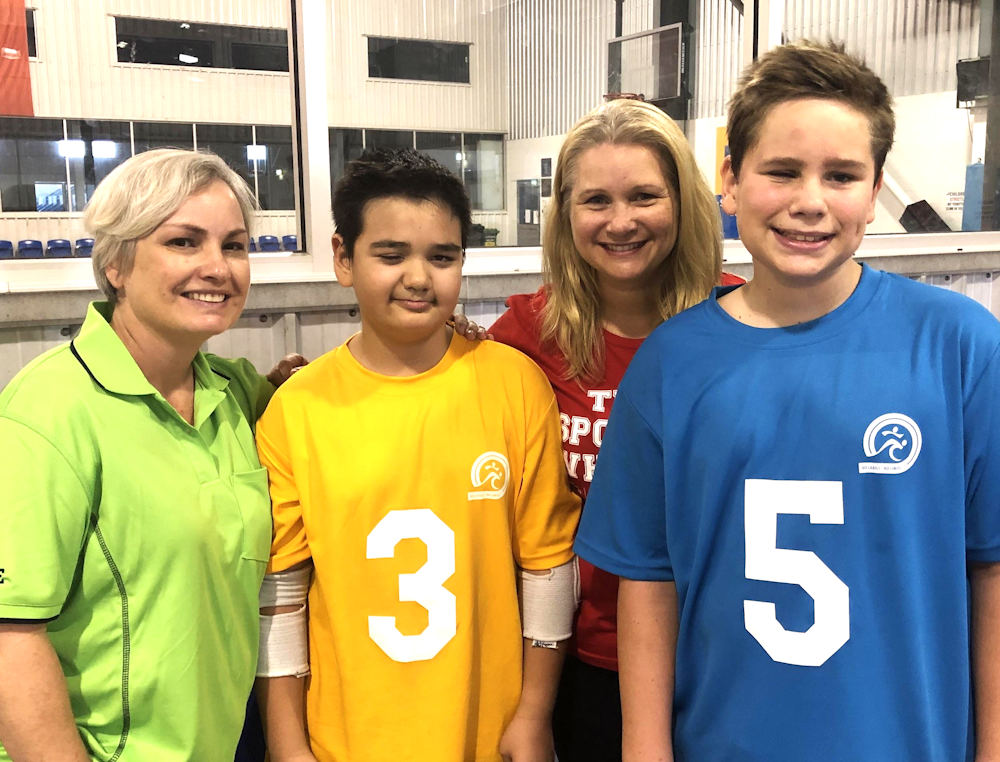 We conducted this research to find ways to improve the educational experience for our sons with a visual impairment.
Author provided
2. I don’t need as much protection as you think I do
Students with disabilities have the same basic needs as other students. But past research shows students with vision impairment tend to be given fewer opportunities in all areas of their life.
Although the students we interviewed felt their teachers treated them equally to others, their comments indicated they were given fewer opportunities.
One student told us:
I am not allowed to play on the monkey bars because it’s too dangerous.
Another said:
they tell me “you might hurt yourself” which pretty much means “get off” or “stop doing that”
I got told I wasn’t allowed to go down the water slide with everyone else. They were wrapping me up in cotton wool.
It’s important for teachers to have expectations of students that prepare them for the competitive job market, where people are judged equally. Students with vision impairment may need help, but they should not be excluded.
Our interviewees acknowledged they wanted to feel included but often felt like they were a burden. One student said:
I often hear [other students] say things like “why do we have to have this kid, because if we have him on our team then we have to use a special ball”.
3. Sometimes I don’t follow instructions because I can’t see them
Sometimes, teachers may assume students with a vision impairment aren’t engaging in work or following instructions. But research shows students with vision impairments often miss out on incidental information, such as non-verbal cues or instructions, that other students picked up.
 Students with a vision impairment can’t always see where the teacher is pointing.
from shutterstock.com
Our conversations with students support this. One of our participants said when a video was being played on the whiteboard, she got “chatty because I can’t see and I get bored”.
Another student said how the teacher gave him direction to go “over there”. This student couldn’t see where the teacher was pointing, so he didn’t do as instructed.
Teachers could interpret both these responses as disrespectful behaviour. But in these instances, the students wanted to engage. They just weren’t able to access the non-verbal cues and weren’t consulted on what strategies worked best for them.
Read more: Standardised tests limit students with disability
Considering classroom activities with equitable engagement, such as videos with audio description and detailed verbal instructions, are simple ways to overcome such barriers.
4. There’s more to me than my disability
There are many variations of vision impairment which are as diverse as the individual students who have them. Research highlights the success of a student is determined by the student’s self-identity.
Our participants indicated they want teachers and friends to see them for the person they are and notice their unique interests and talents.
We asked students how they would describe themselves. Not once did they place their vision impairment as primary to their identity. They said things like:
I’m a good reader
I’m quite an active learner
I have high expectations
I am a sporty kid
I enjoy music and I play drums in the band
I’m not very good at math.
Our research shows that despite some barriers to education, students with vision impairment are being more included in mainstream classes than before. This is due, in part, to the increasing opportunities afforded by digital devices.
Strategies such as asking students how to best support them, understanding their individual needs, and encouraging social participation through an inclusive school culture can all help students with vision impairment access education on the same basis as their peers.
Authors: Melissa Cain, Lecturer in Inclusive Education and Arts Education, Australian Catholic University


 Daily Bulletin


