

PolyU research reveals that over 10% Hong Kong people exhibit PTSD symptoms one year after the onset of the pandemic; Severity of symptoms is associated with time spent watching pandemic-related news
- Written by: Daily Bulletin
- Published in News from Asia
HONG KONG SAR - Media OutReach - 25 May 2022 - Two years on, various activities in the community have been gradually resuming amid the COVID-19 pandemic as social distancing measures are further relaxed.
Living under the shadow of the pandemic has been exhausting, many are not only tired of battling COVID, but also exhibit different levels of mental distress or even trauma. Unhealthy mental status is something that should not be disregarded as it may entail different kinds of issues.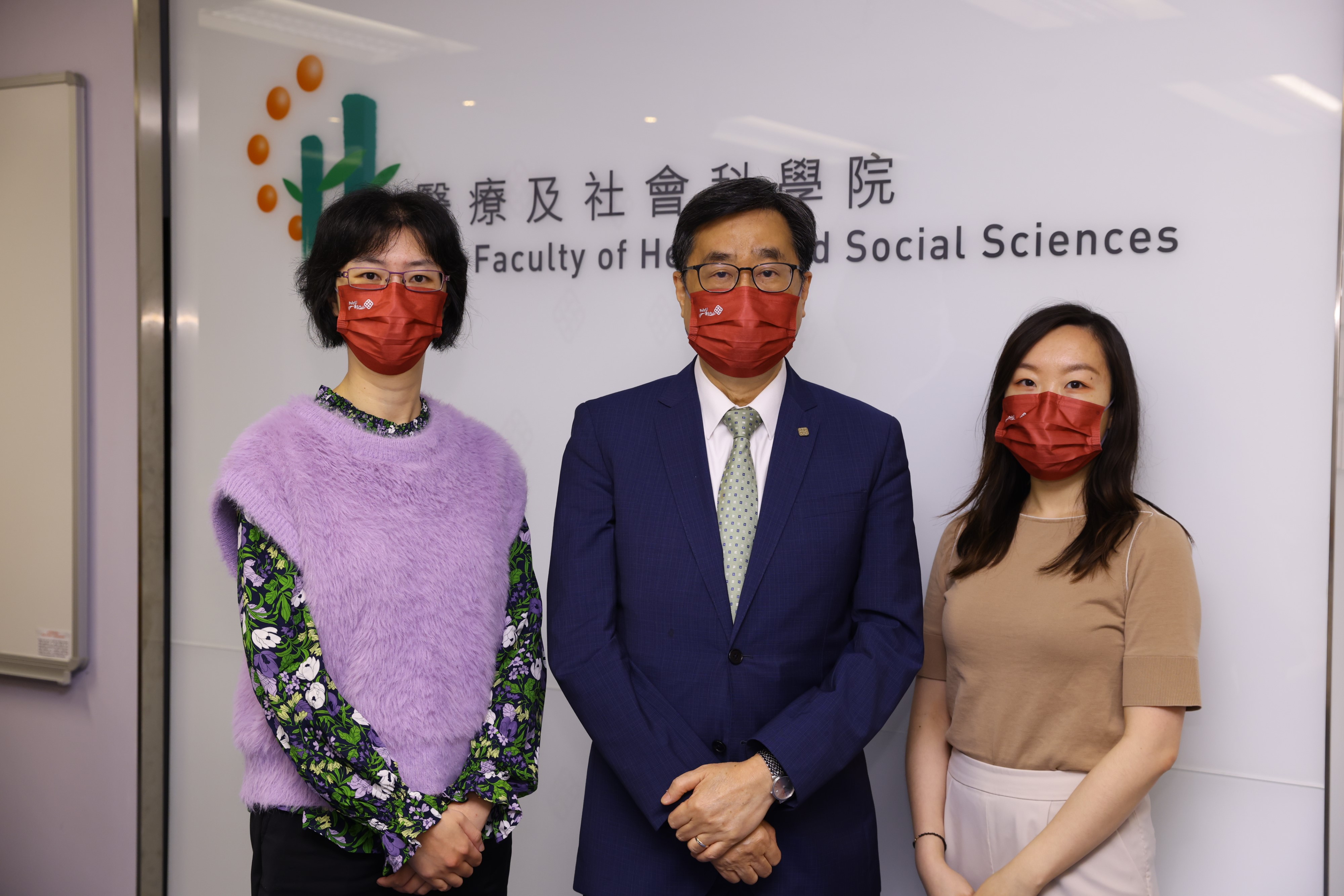
Researchers from the Faculty of Health and Social Sciences: Prof. David SHUM, Yeung Tsang Wing Yee and Tsang Wing Hing Professor in Neuropsychology, Chair Professor of Neuropsychology and Dean of Faculty of Health and Social Sciences (middle), Dr. Judy Yuen-man SIU, Associate Professor of the Department of Applied Social Sciences (left) and Dr. Sally Yuan CAO, Research Assistant Professor of the Department of Rehabilitation Sciences (right).
With support from the Health and Medical Research Fund of the Food and Health Bureau, a research team from the Faculty of Health and Social Sciences of The Hong Kong Polytechnic University (PolyU) started a mixed-method study in 2020. The objective of the study was to explore the level of adult psychological trauma one year after the onset of the pandemic through a telephone survey and in-depth individual interviews, so as to identify the impact of the pandemic on Hong Kong people’s mental health. Additionally, the study aimed to discover the demographics in relation to compliance with preventative measures, and to discover the determinants of motivation for vaccination for the disadvantaged, especially the elderly. The study results were published in the academic journals BMC Psychiatry and BMC Geriatrics respectively in April 2022.
This study comprised two components. The first component, a large-scale telephone survey study involving over 3,000 Hong Kong residents, was completed between December 2020 and February 2021, i.e., during the fourth wave of the pandemic and about one year after its onset. Among the respondents, 69% were aged between 18 and 59, and most of them were working adults. The survey found that:
- More than one in ten (12.4%) of the respondents had exhibited post-traumatic stress disorder (PTSD) symptoms, indicating that they might have PTSD
- Being unemployed or having no personal income, and with lower educational attainment were associated with a higher chance having of PTSD symptoms
The research team noted that the survey was conducted when the epidemic had been persisting for over one year, when the prevalence of PTSD symptoms among Hong Kong people was generally lower than at the early stage of the pandemic. This reflected not only the fact that people had been learning how to cope with the impacts of the pandemic, but also that they had started to become insensitive to its volatility.
In terms of the compliance with preventative measures, it was found that:
- Married females in their middle age or older with higher educational attainment were consistently more compliant with various preventative measures
- Among all the preventative measures, maintaining good hand-hygiene and environmental hygiene were reported to be the most difficult to follow
- About 46% of the respondents expressed willingness to receive the COVID-19 vaccine, the majority of whom were married males in their middle age or older who were family caregivers with lower educational attainment
Furthermore, the amount of time spent watching pandemic-related news was found to be associated with the severity of PTSD symptoms. Respondents who watched pandemic-related news for over one hour a day were found to be associated with increased compliance with anti-pandemic measures and related advice, but also with more severe PTSD symptoms.
The second component of the study involved qualitative in-depth interviews. The objective was to understand clearly the mental status of the older adult population when facing the pandemic, including their understanding, feelings and behaviour, as well as their perception of vaccine. Between November 2020 and February 2021, i.e., during the fourth wave of the pandemic, 31 adults over the age of 65 were interviewed, among whom about 70% were retired. Through the interviews, it was found that the elderly generally believed COVID-19 was highly transmissible. As such, most of them avoided leaving home for exercise and had halted many regular activities. In addition, most of them had experienced worry, helplessness and depression, while some of them even expressed their frustration in interviews.
Regarding the perceptions of vaccination, it was found that the interviewees’ vaccine willingness was primarily affected by their personal experiences and opinions of their peers and families. Lack of understanding about the vaccines, cultural perception and peer pressure were the main contributors to hesitancy, while fragile social networks and weak family support were the greatest barriers to vaccination.
Prof. David SHUM, Yeung Tsang Wing Yee and Tsang Wing Hing Professor in Neuropsychology, Chair Professor of Neuropsychology and Dean of Faculty of Health and Social Sciences at PolyU who led the study pointed out that: “The elderly were still suffering from the negative impacts of the pandemic despite the fact that the fourth wave (when the survey was conducted) had been gradually subsiding after persisting for a period of time. Being in a constant state of stress and not managing it could cause adverse impacts on our mood and daily lives, may lead to mental health problems in the long run.” Prof. Shum stated that while society is beginning to resume normal life, people’s mental health should also return to normal at the same time. He appealed to the public to carefully assess PTSD symptoms caused by the pandemic and pay close attention to changes in their own bodies, feelings, behaviours and socialising activities. They should seek help from professionals or social welfare organisations once symptoms begin to affect their daily lives for a period of time.
Dr. Judy Yuen-man SIU, Associate Professor of the Department of Applied Social Sciences and one of the research team members, advised that clearer health information about the vaccines should be disseminated to the elderly. In addition, more resources should be invested in the elderly support networks, in particular strengthening the support to the elderly before and after vaccination so as to allay their concerns about receiving vaccines. “Anti-pandemic supplies and information provided by various sectors of society have become the greatest source of support to the elderly. We suggest enhancing the connection between the non-governmental organisations (NGOs) and the elderly to help ensure their good physical and mental health,” said Dr. Siu.
According to Prof. Shum, the PolyU team will continue to collaborating with various NGOs to provide professional advice tailored to the elderly’s physical and mental health needs amid the pandemic. He hoped a cooperative network comprising the Government and the educational and social welfare sectors could be established to reinforce the support provided for protecting Hong Kong people’s mental health.
#PolyU


 Daily Bulletin


